
My Best Tips for Parent Coaching in Therapy
How to Confidently Coach Parents in Therapy (Even If It Feels Intimidating)
Parent coaching is one of the most important parts of what we do as SLPs.
And also… one of the hardest.
It’s so much easier to take a child back to the therapy room, run a great session, and then bring them back out 30 minutes later with a quick recap. Clean, simple, done.
But if you’ve ever felt like progress isn’t fully carrying over outside your sessions… this is why.
Because we spend such a small fraction of time with our clients.
There are 168 hours in a week. And we’re lucky if we get one.
That means the real progress doesn’t come from what happens in your session – it comes from what happens in the other 167 hours.
And that’s where parent (or caregiver) coaching comes in.
Let’s Talk About the Intimidation Factor
Early in my career, I remember feeling so intimidated. I was 22, didn’t have kids, and constantly thought: “Who am I to tell parents what to do?”
But what I later learned was that fear was completely in my head.
Because not once did a parent question my ability because I didn’t have kids.
And now, as a parent myself, I can tell you that’s not what matters.
Parents aren’t thinking: “Does this therapist have kids?” They’re thinking: “Does this person care about my child?” or “Are they helping my child make progress?”
That’s it.
Why Parent Coaching Matters (Even If It’s Hard)
Parent coaching isn’t just a “nice addition” to therapy. It’s the thing that makes therapy work in real life.
But it is harder because it requires you to think on your feet, communicate clearly, guide instead of control, let go of being the one “doing it perfectly”.
And because of that, many therapists avoid it or only do it occasionally.
But after 15 years of coaching parents I realized that you don’t have to coach for the entire session. You can start small.
Invite parents in for the last 10 minutes. Or coach every few sessions instead of every session. You can also include other caregivers like grandparents, nannies, and siblings. It doesn’t have to be all-or-nothing.
Two Mistakes That Creates Parent Friction
First: Unclear Expectations
You might have experienced this before:
“I thought this was going to be one-on-one therapy…”
“I wish I was more involved in the sessions…”
These parents aren’t trying to be difficult. The expectations were just unclear. Which is good news because the fix is simple. Be upfront from the beginning.
Explain what your therapy approach will look like. Tell the parents if you are planning on working directly with the child or how and when coaching and collaboration will be addressed.
When families know what to expect, everything runs smoother.
Second: Asking Permission
At one point, I used to ask parents: “Do you want me to demonstrate this, or coach you through it?”
They chose demonstration. Every single time.
Not because they didn’t want to be involved in the session. But because coaching feels vulnerable. It’s easier to watch than to do.
So I stopped asking. And instead, I lead them through a structure that naturally brings them into the process.
And I’m going to share that framework with you now.
My 5-Step Parent Coaching Framework
1. Introduce the Concept
Start by explaining one simple strategy.
Not five. Not ten. One.
Keep it short and clear and let the child stay engaged while you explain.
2. Model the Strategy
Show the parent exactly what it looks like.
This step is key.
When parents see it in action, they understand it faster and feel more confident trying it themselves.
3. Coach the Activity
This is where most therapists get stuck.
Instead of explaining… guide them through the process:
- Prompt them in real time
- Tell them exactly what to say or do
- Keep the activity moving
No long explanations. No pausing to teach. Just support them through doing.
4. Reflect and Analyze
After the activity is complete, then you talk about it.
This is where learning happens.
You could say things like “Did you notice when we paused, he lost attention?” or “What do you think worked really well there?”.
This helps parents connect the dots.
5. Create a Plan
Finally, you shift ownership to the parent. So instead of telling them what to do, ask them questions like “When could you try this at home?” or “What would this look like during bath time?”
The goal here is for them to create the plan. Because when they do, that is when it sticks.
Parent coaching isn’t about getting parents to “do it perfectly” but rather more about building their confidence. It’s about helping them feel capable, supported and successful.
And when you provide that support, the skills you teach in therapy stop being something that only works in your sessions and become something that works for them in their daily life.
Want to Fast-Track Your Parent Coaching Skills?
If you’re ready to feel more confident in your sessions and actually see carryover happen outside of them…
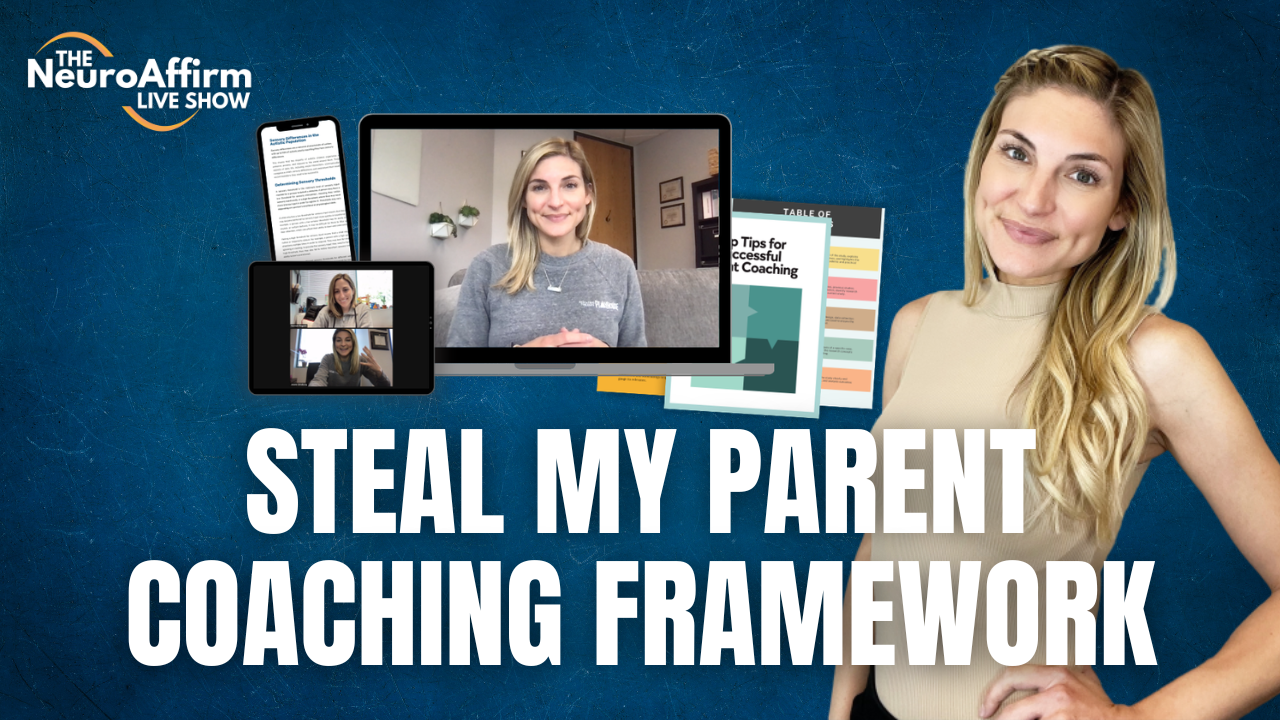
I put together a Parent Coaching Webinar + Workbook that walks you through exactly how to do this step-by-step.
Inside, you’ll learn how to:
- Get real coaching buy-in from families (without it feeling awkward or forced)
- Implement a simple, repeatable 5-step parent coaching structure
- Adjust your coaching based on the parent’s unique personality
- Generate follow-through so strategies actually happen at home
This is everything I wish I had when I first started – broken down in a way that’s practical, doable, and immediately applicable.
>> Click here to access the Parent Coaching Webinar + Workbook
If parent coaching has ever felt unclear or uncomfortable, this will give you the structure (and confidence) you’ve been missing.
